Two children three years apart want different things from a coloring book, and two books is two arguments. How to set up coloring that works for both at one table: one book, two ways in, and a job for the older one.
Why two books start arguments
Coloring activities for siblings of different ages usually go wrong in one of two ways. The book is right for the little one, and the six year old calls it babyish and wanders off; or it is right for the big one, and the three year old cannot start a page and wants theirs instead. Buy one of each and the children want each other’s.
The fix is not two books. It is one table, one book that works at both ages, and a page each.
One book, two ways in
Some coloring books are ordered by effort, with the simplest pictures at the front and fuller ones further in. That order is what makes one book work for two ages: the three year old colors from the front, the six year old from the middle, and both are in the same book with the same animals.
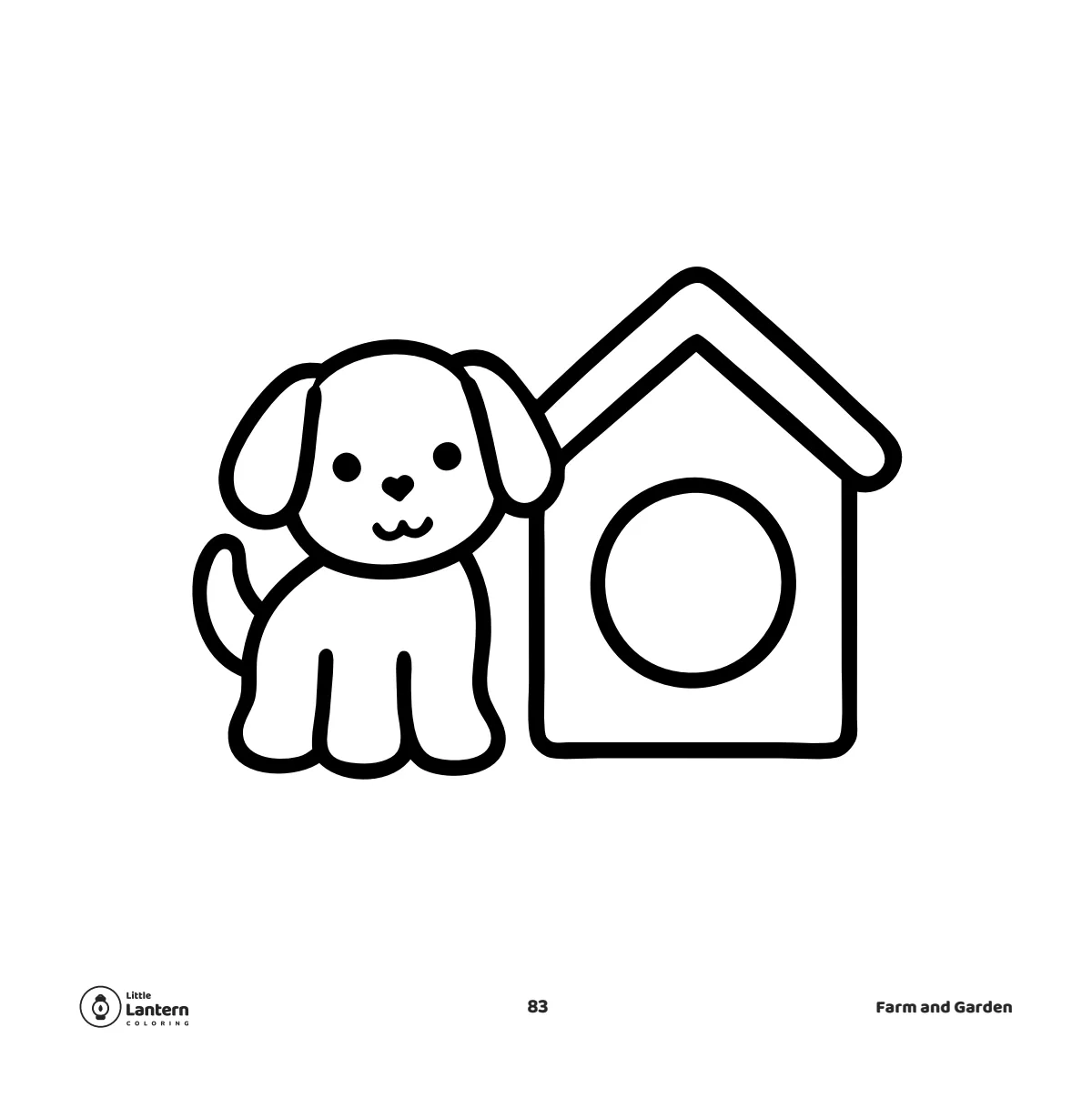
Look for a book where even the fuller pages are one big subject, so the little one can still try them, and where the simple ones are not so bare that the older child is bored. A six year old will happily take care over a puppy’s collar and the door of its kennel, where a three year old fills the body and is done.
A page each, side by side
Sharing one picture rarely works at these ages. The three year old colors across the six year old’s careful part, and that is the end of the afternoon. Give each child their own page, next to each other, at the same table.
If the book is single sided, a page can be cut out for one child while the other keeps the book. Or print two copies of the same free page, so both color the same duck in their own way and can compare them after.
A job for the older one
A six year old with a three year old beside them likes being the expert, and a job keeps that friendly:
- Choosing. The older one picks four colors for the little one’s page.
- Naming. They read or say what the picture is, and what sound it makes.
- Helping with an edge. Not doing it for them: holding the page still, or showing where the wing ends.
- Judging. Choosing which of the two finished pages goes on the fridge first, as long as they take turns.
Keep it a job, not a rule. If the older one wants to color their own page in peace, that is fine too.
Crayons: shared, but plenty
Put one box of crayons between them and make sure it has enough of each color that nobody waits: two of the favourite colors, not one. Chunky crayons suit both ages; the six year old can have a few ordinary ones too, for details.
When the older one wants more
Somewhere around seven, a child who likes coloring will want pages with more in them than a three year old’s book can hold. That is the moment for a book of their own, and the younger one keeps the shared one.
If you want one of ours
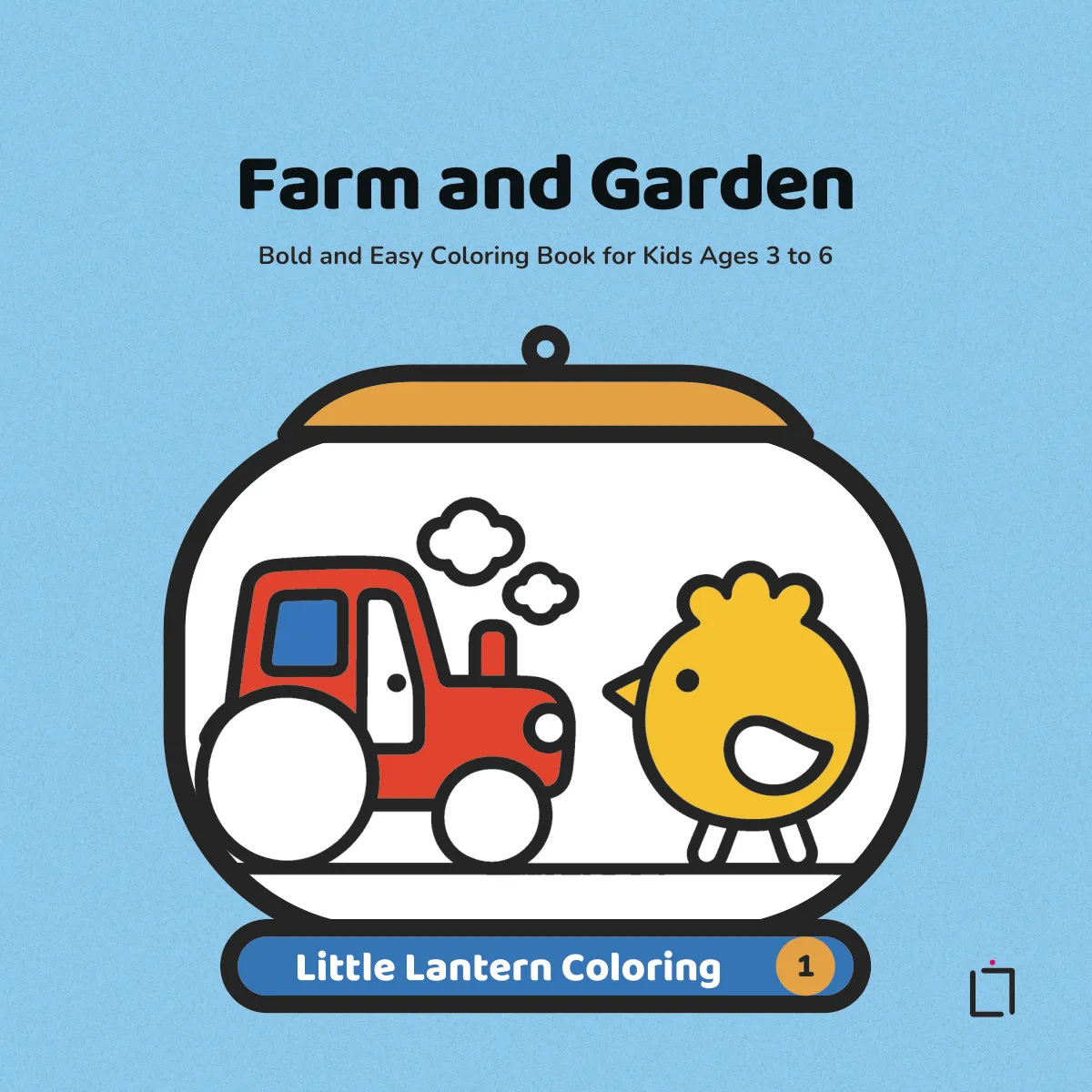
This part is about our own books, so weigh it accordingly. Little Lantern Coloring is drawn for exactly this: ages 3 to 6 in one book, the easiest pages first and fuller ones further in, every page a single big subject, and every picture on its own page with the back left blank, so one can be cut out. Farm and Garden is the first volume and goes on sale in November. For a child of seven or more, Cute Animals in Lantern Coloring is the step up, and the whole Little Lantern series shows what comes next.