There is no age on a calendar when markers become safe. There is a child who no longer chews things, a broad washable marker with a cap that lets air through, and a page that will not let the ink reach the next picture. What to buy, and how to set it up.
What age
Parents ask what age a child can use markers as if there were a date. There is not, and the age printed on a pack is the maker’s own advice. What matters is the child: a child who still puts things in their mouth is not ready, whatever the box says, and a child who has stopped usually is. For many that is around three, sometimes earlier, sometimes later.
Markers also ask a little less of the hand than crayons. They need no pressure to leave a bright mark, which suits a child who has not yet got the strength to press a crayon hard. They also make a mess faster, which is the other half of the decision.
Which tip
For a three year old, choose a broad tip, the cone or bullet shape, over a fine one. A three year old presses hard, and a fine tip bends, splits or pushes back into the barrel. A broad tip also fills a big space in a few strokes, which matters to a child who wants the duck finished.
Leave fine liners and brush tips for later. They suit a child of five or six who colors details on purpose, and they suit grown-ups.
Washable
Washable markers are made to come out of skin, most clothes and most hard surfaces with water. They are not a promise, and a light fabric left overnight may keep a ghost of the color, but the difference from permanent ink is the difference between an afternoon and a ruined sofa. For a three year old, buy washable or wait.
The cap
The cap is the part to look at in the shop. A cap is small enough to go into a mouth, and children chew them. The international standard for pen and marker caps, ISO 11540, covers caps on writing and marking instruments that children up to 14 are likely to use, and sets requirements to reduce the risk of a cap causing asphyxiation (ISO). In practice that means a cap with a hole or a channel that lets air through, or one too big to be swallowed. Look for the hole in the top of the cap.
Keep caps on the table and count them back in at the end. It is a good habit, and three year olds like counting.
Non-toxic
Look for a non-toxic seal on the pack. In the United States the AP seal of the Art and Creative Materials Institute means a board-certified toxicologist has evaluated the product, and the institute advises looking for it on creative products for children up to sixth grade (ACMI).
The page behind
A marker soaks through paper in a way a crayon does not. On a coloring book printed on both sides of the sheet, the ink from one picture shows through on the next, and a three year old pressing hard can push it right through. Two things stop it:
- A single-sided book. Every picture on its own sheet with the back left blank, so whatever comes through lands on nothing. If a listing does not say single sided, assume it is not.
- A sheet behind the page. Slip a piece of scrap paper or thin card under the page being colored. It catches the ink, and it can be thrown away.
Why markers bleed through a coloring book goes further, for grown-up books and stronger inks. For a three year old with washable markers, the two fixes above are enough.
Crayons first, markers alongside
Markers are not a replacement for crayons. A crayon asks the hand to press, which builds strength, and it forgives a heavy hand where a marker floods. Many children are happiest with both on the table: crayons for the big quiet spaces, a marker or two for the bright bits. A box of eight broad washable markers is plenty to start with.
If you want one of ours
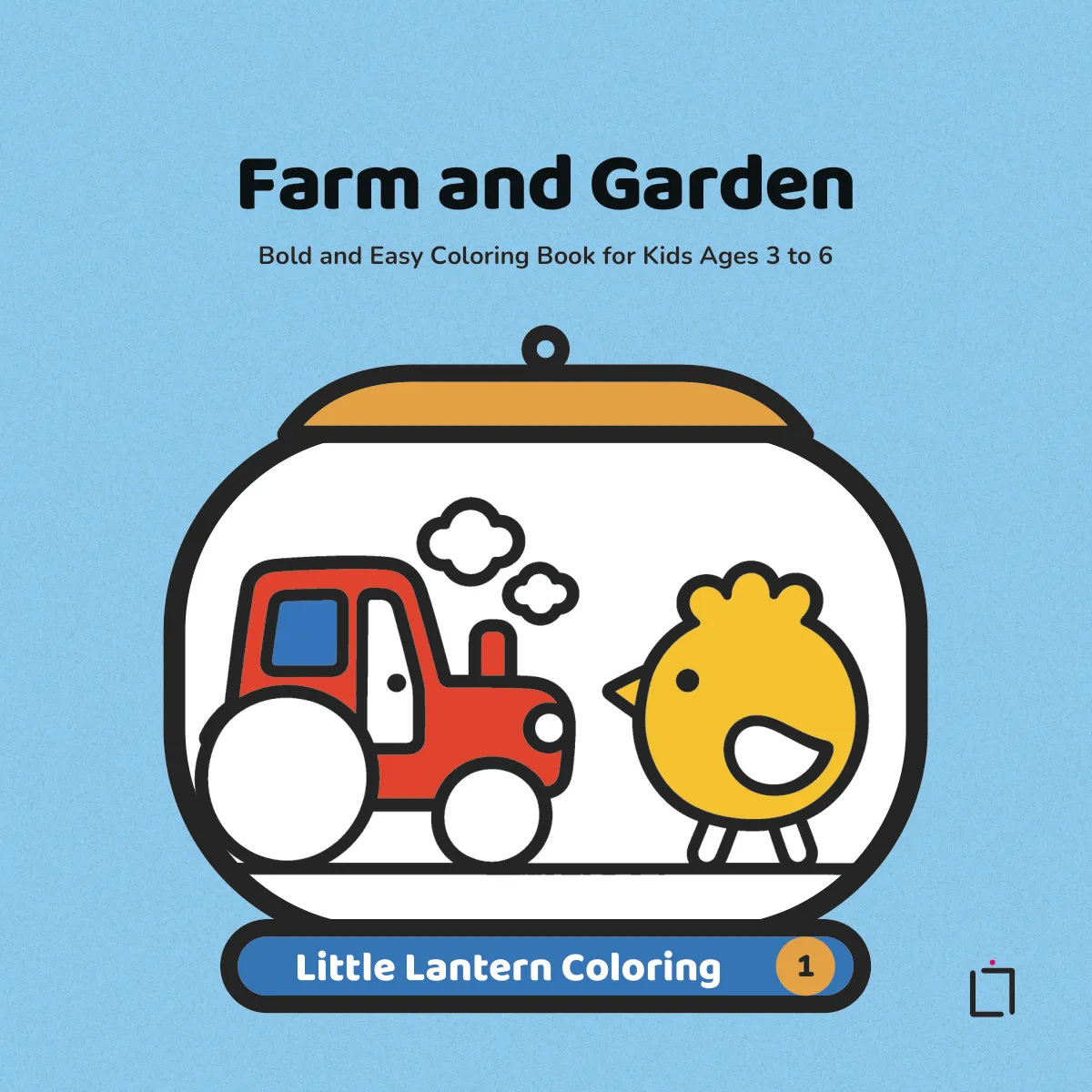
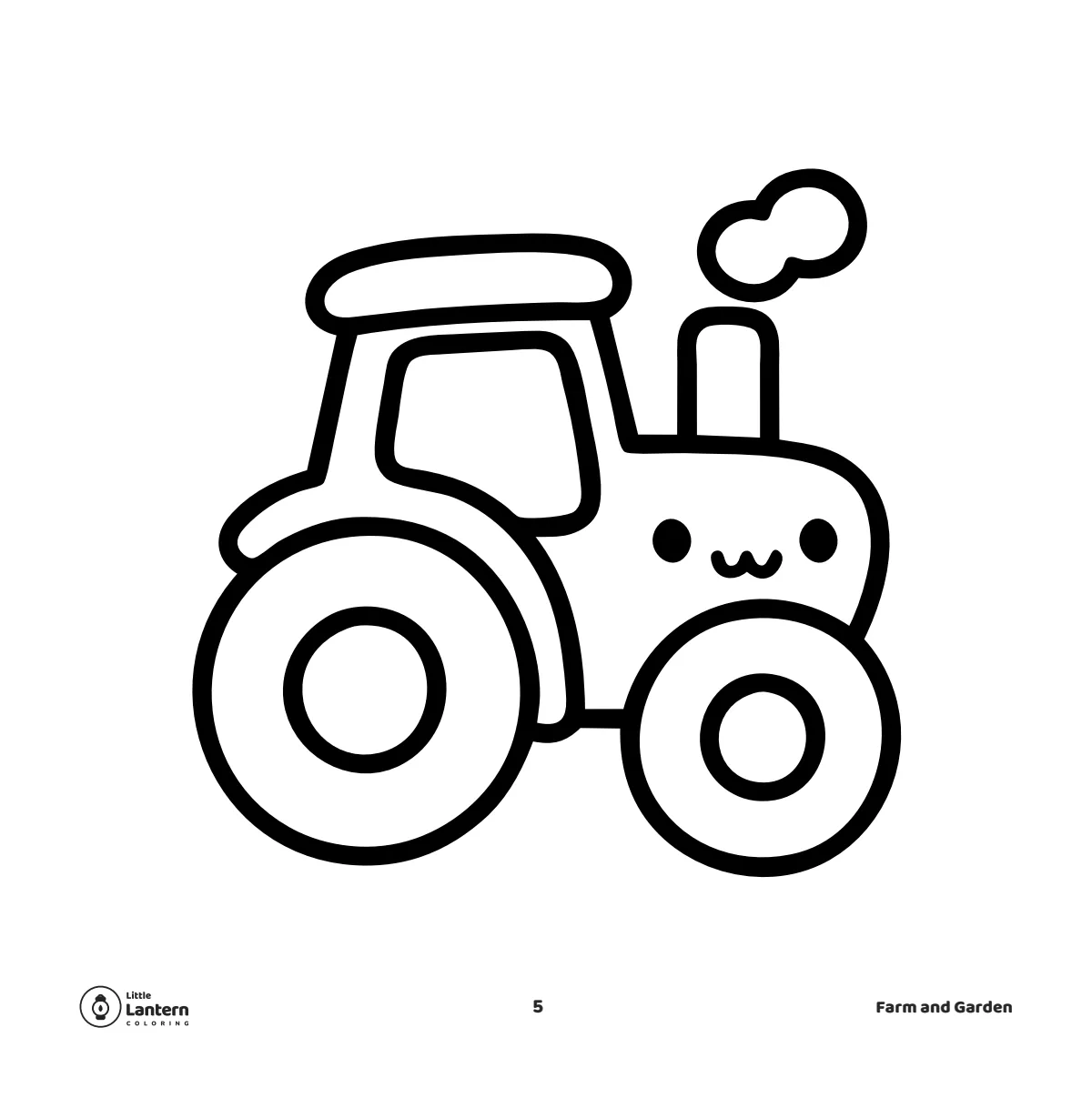
This part is about our own books, so weigh it accordingly. Little Lantern Coloring is printed single sided, with every picture alone on a right-hand page and the back left blank, and its spaces are big enough for a broad tip to fill in a few strokes. The paper is standard book paper, not card, so put a sheet behind the page when markers come out. Farm and Garden, the first volume, goes on sale in November; the tractor above is from it. Coloring gifts for a 3 year old has a book, crayons and markers put together at three sizes.
Sources
- ISO. ISO 11540:2021, Writing and marking instruments: specification for caps to reduce the risk of asphyxiation, August 2021. Applies to caps on writing and marking instruments likely to be used by children up to 14.
- Art and Creative Materials Institute. Materials safety. The AP seal identifies art materials certified in a toxicological evaluation by a board-certified toxicologist; check for it on creative products for children in sixth grade or younger.