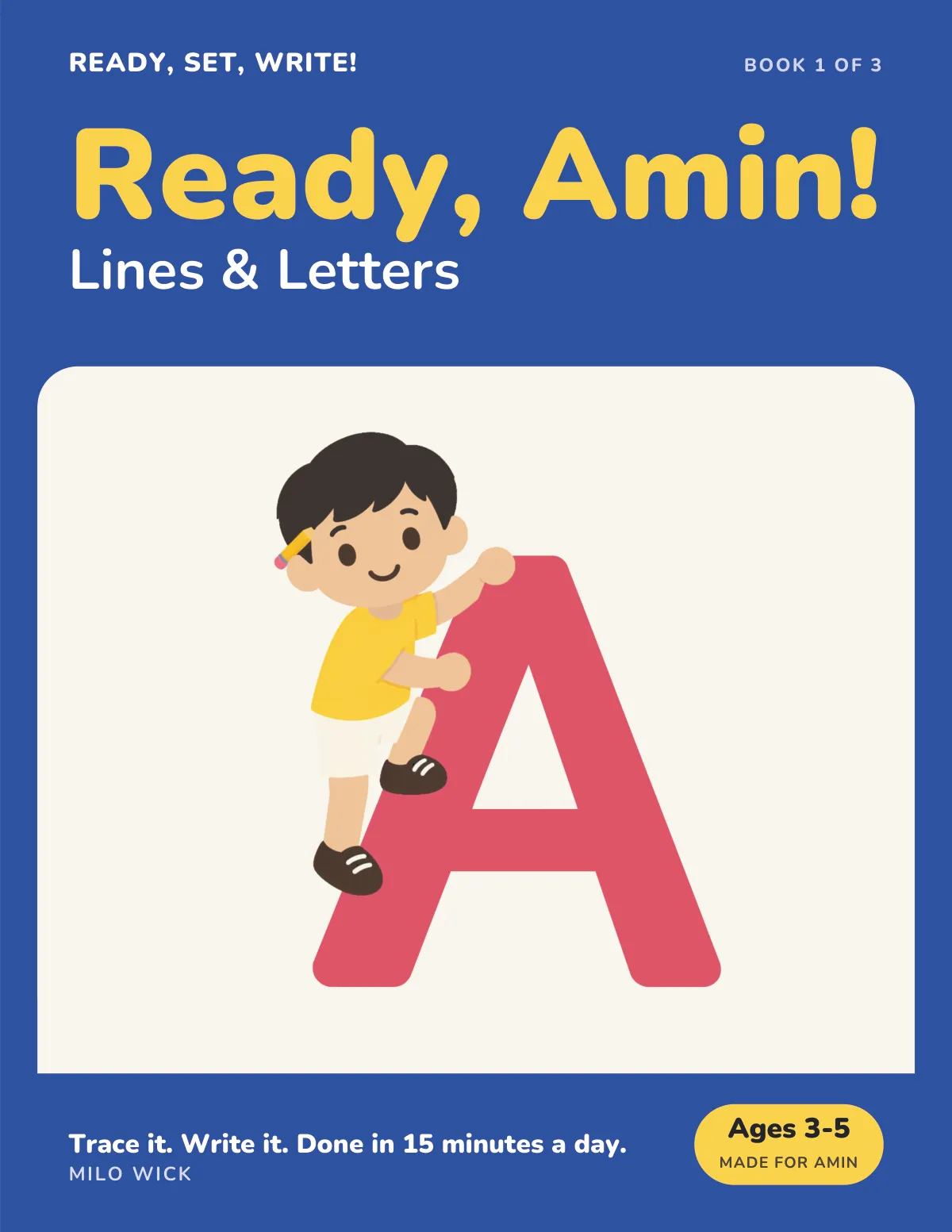
A book with the child's name in it is sold as a way into reading. A handful of studies have tested that, most of them by one researcher, and what they found is more interesting, and more modest, than the marketing. What they showed, what they did not, and how to read one so it helps.
The evidence in brief
Do personalised books help children learn to read? Most of what is known comes from Natalia Kucirkova and her colleagues, who have studied personalised books for about a decade, and from one review by the National Literacy Trust. Put together:
- Children like them more. Toddlers smile, laugh and talk more over a book made about them. That is consistent across the studies.
- Some children learned more words from them. In one study with a printed book, children learned new words better when the words were in the personalised parts of the story.
- Not every study found a gain. A digital personalised book showed no difference in word learning, and a story with only the child’s name dropped in did not help children understand it.
- The studies are small. Seven families, eighteen children, twenty-six pairs. The literacy charity’s review calls the evidence promising and “relatively small scale”, and Kucirkova herself writes that the studies “are too few for us to know for sure”.
So the honest answer is: possibly, a little, for some things, and nobody has shown that a personalised book makes a child a better reader. What the studies do show is that a book about the child is a book the child wants to open, and that is not nothing.
What the studies found
Engagement, in toddlers. Kucirkova, Messer and Whitelock (2013) watched seven parents at home sharing three books with their children, aged 12 to 33 months: one made about the child, a similar book that was not, and the child’s favourite. Children and parents smiled and laughed significantly more with the personalised book, and there was more talk over it than over even the favourite. Seven families is very few; this measured enjoyment, not learning.
New words, at about 4. Kucirkova, Messer and Sheehy (2014) read 18 children, average age 3 years 10 months, one picture book twice, a week apart. The book had personalised passages and plain ones, with unfamiliar words placed in each. At the later tests, the children knew more about the words from the personalised passages than about the words from the plain ones. It is one book and a small group, and it compares parts of the same book, but it is the clearest learning result there is.
More talk. In a second study by the same team, 35 preschool children spoke more, and for longer, when they shared personalised books. Most of what they said was about themselves, which matters, and comes up below.
What they did not find
No gain from a digital personalised book. Kucirkova and colleagues (2021) watched 26 mothers reading with their 3 and 4 year olds from a book on a screen, with pages personalised with the child’s name, photo, favourite toy and food. There was no difference in word learning between the personalised pages and the plain ones. The paper’s own emphasis is on the parent, and on “the importance of parents’ role in expanding beyond children’s focus on self”: talking about the other characters, not only the child.
The name alone is not enough. Kruse, Faller and Read (2021) read preschool children a story about sharing, with or without the child’s name in it. Putting the name in did not help children understand the moral or make them share more. Kucirkova’s summary for parents says the same: a personalised book “did not help children understand the moral of a story”.
Why it might work, and the catch
The likeliest explanation for the positive results, and the one the engagement findings point to, is attention: a child pays closer attention to a story about themselves, and a word met while paying attention is better remembered. That is our reading rather than something the studies tested, but it fits them, and it also explains the catch. A child absorbed in themselves talks about themselves. Kucirkova calls it the “me, me, me” problem: the talk that personalised books produce is mostly about the child’s own life, not about the story or the other people in it.
Her answer is not to avoid them but to balance them: books about the child alongside books about other children, other families and other places, what she calls the sweet spot of personalisation and pluralisation.
Names and letters: the stronger evidence
The firmest evidence near this question is not about personalised books at all. It is about the child’s own name, and it is older and broader:
- Children learn the letters in their own name earlier than other letters (Justice and colleagues, 2006, with 339 four year olds).
- They know the name of their own initial better than any other letter’s (Treiman and Broderick, 1998).
- In a yearlong study of 3 to 5 year olds, writing their name went together with knowing the alphabet, and about 40 per cent of the letters children wrote unprompted came from their name (Bloodgood, 1999). That study measured correlations, not causes.
So a book that uses the child’s name to teach letters is building on the best-established finding, rather than on the most hopeful one. That is a different thing from a story with a name pasted in, and it is the distinction to look for. Name recognition activities for preschoolers has the games that use it at home.
How to read one so it helps
What the studies suggest, put into practice:
- Read it together. Every study had an adult read the book with the child, so that is the only use the evidence covers; none tested a child reading alone. A personalised book left on a shelf is just a book with a name on the front.
- Talk past the child. Point at the other characters, ask what they are doing and how they feel. It is the parent’s part the 2021 study’s authors single out.
- Use the name for something. Point to it, find its first letter elsewhere on the page, spell it out. A name that is only decoration teaches nothing.
- Keep it one of many. One book about them, among many books about everyone else.
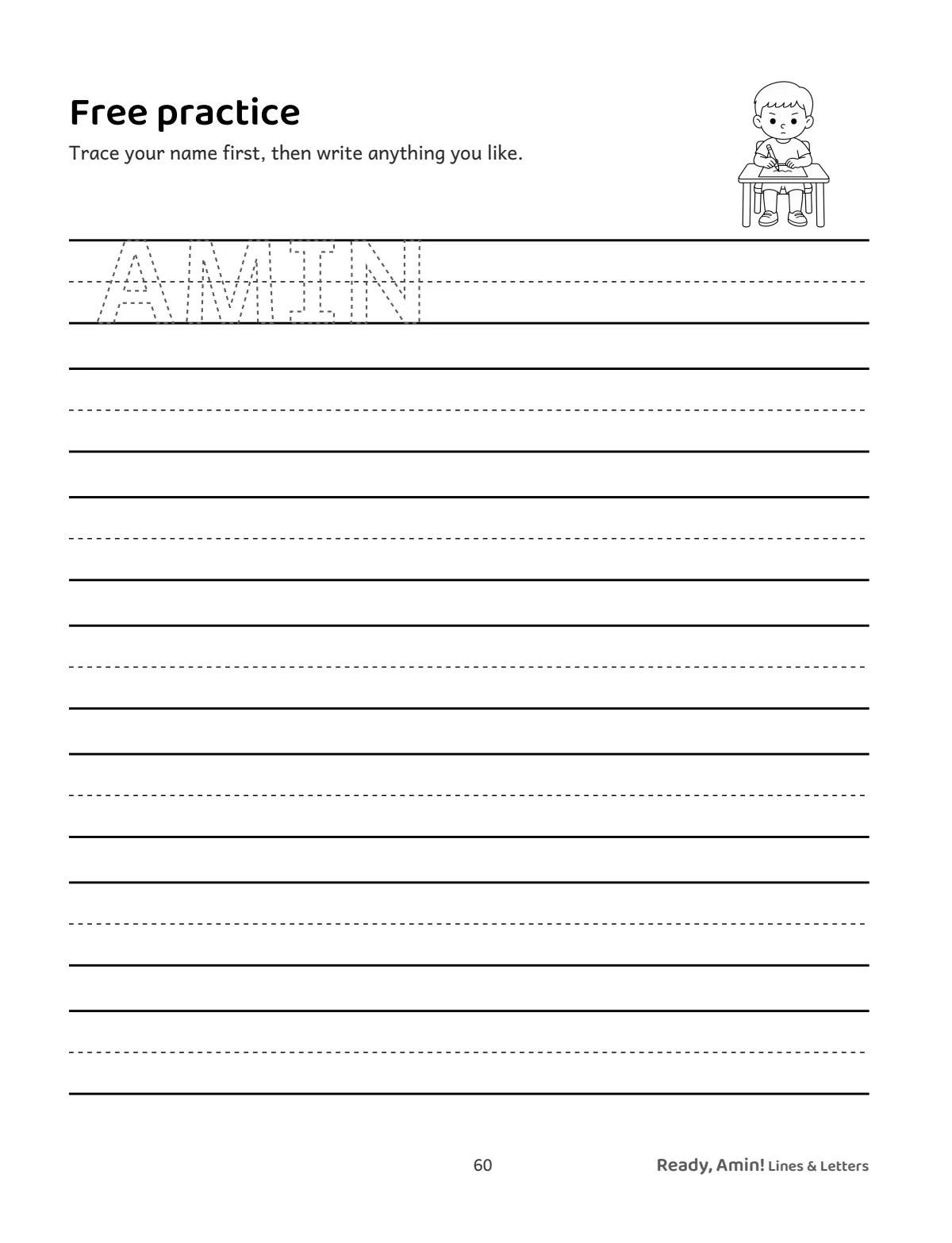
Personalised books for children covers the kinds there are, the cautions about photos and data, and when one is worth buying. The personalised book we make is a handwriting workbook rather than a story: it uses the name for the letter page of the child’s initial and for the name they learn to write. No study has tested a personalised handwriting book, and we do not claim one has.
Sources
- Bloodgood, J. W. (1999). What’s in a name? Children’s name writing and literacy acquisition. Reading Research Quarterly, 34(3), 342 to 367.
- Justice, L. M., Pence, K., Bowles, R. B., and Wiggins, A. (2006). An investigation of four hypotheses concerning the order by which 4-year-old children learn the alphabet letters. Early Childhood Research Quarterly, 21(3), 374 to 389.
- Kruse, E., Faller, I., and Read, K. (2021). Can reading personalized storybooks to children increase their prosocial behavior? Early Childhood Education Journal, 49(2), 273 to 282.
- Kucirkova, N. (2020). Read this before you fall for a personalised book. OpenLearn, The Open University.
- Kucirkova, N. (2021). The educational power (and the limits) of personalized children’s books. Scientific American.
- Kucirkova, N., Gattis, M., Spargo, T. J., Seisdedos de Vega, B., and Flewitt, R. (2021). An empirical investigation of parent-child shared reading of digital personalized books. International Journal of Educational Research, 105, 101710.
- Kucirkova, N., Messer, D., and Sheehy, K. (2014). Reading personalized books with preschool children enhances their word acquisition. First Language, 34(3), 227 to 243.
- Kucirkova, N., Messer, D., and Sheehy, K. (2014). The effects of personalisation on young children’s spontaneous speech during shared book reading. Journal of Pragmatics, 71, 45 to 55. Its findings as reported in the National Literacy Trust review.
- Kucirkova, N., Messer, D., and Whitelock, D. (2013). Parents reading with their toddlers: the role of personalization in book engagement. Journal of Early Childhood Literacy, 13(4), 445 to 470.
- Picton, I. (2017). Personalised print books and family literacy outcomes: a literature review. National Literacy Trust.