Printable coloring pages are free, quick and endless, and most of them are wrong for a three year old: too detailed, too faint, too small on the sheet. What to look for, where to find pages worth printing, and how to print them so the lines stay bold.
What makes a page right for three
Free printable coloring pages for 3 year olds are everywhere, and the search is the easy part. The hard part is that most pages labelled for toddlers are drawn for older children: a scene, small details, a thin line. The checks are the same as for a book.
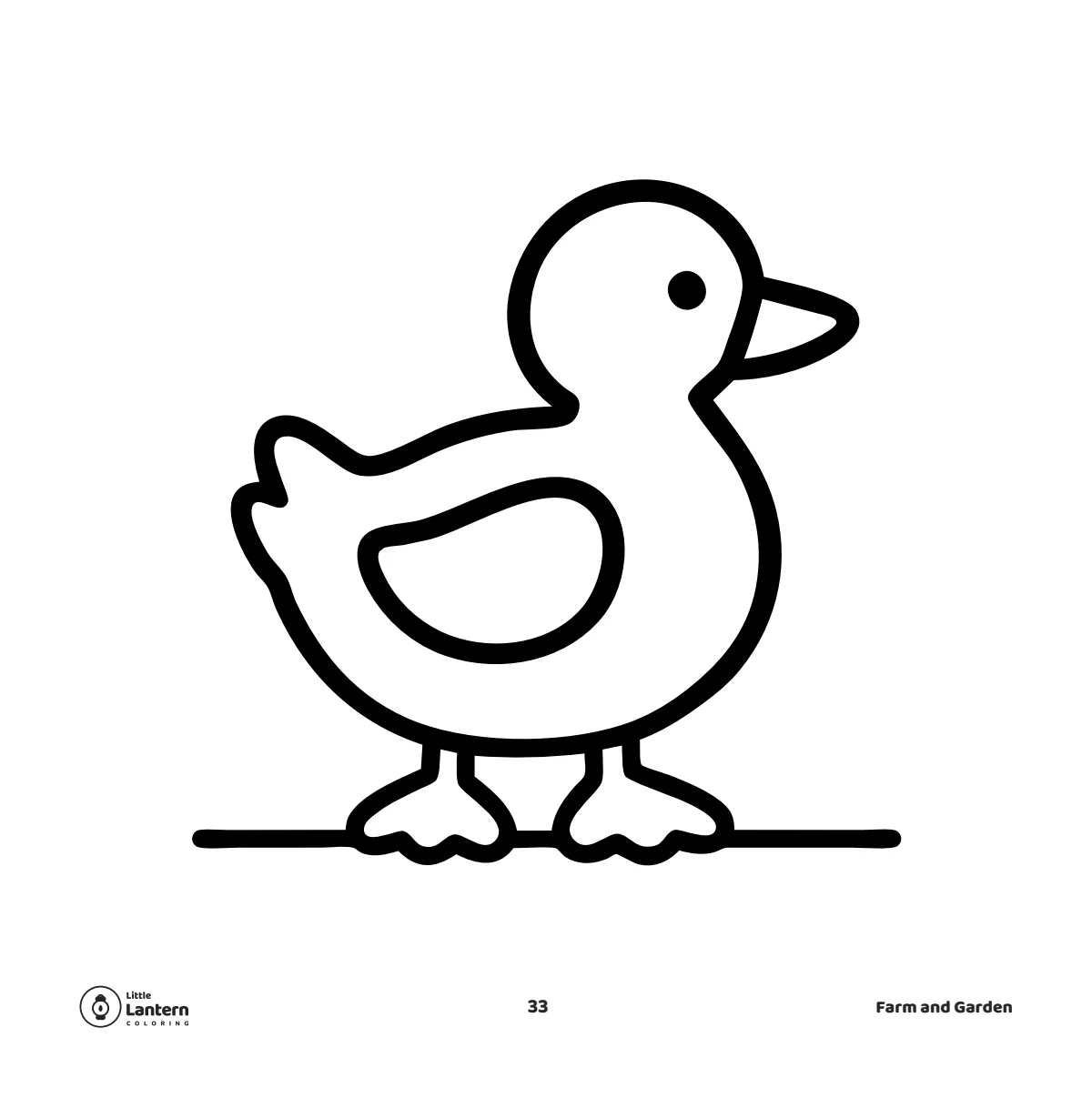
- One big subject. One animal, one vehicle, one flower, filling most of the page.
- Thick outlines. A line that looks like a marker stroke on screen, not a pen line. Thin lines get fainter still on a home printer.
- No tiny spaces. Nothing narrower than a chunky crayon, about a centimetre. Count the spaces: a dozen or fewer is right at three.
How to choose a coloring book for a 3 year old explains each check in more detail.
Where good pages come from
Free pages come from three kinds of place. Many sites of free coloring sheets carry a lot of advertising, and some ask you to click through several pages before the download; check that what you print is the picture and not an advert. Publishers and illustrators often give away a few sample pages from their books, drawn and checked to the book’s standard. And libraries, nurseries and children’s museums sometimes print their own.
Whichever you use, look at the page full size before printing. A thumbnail hides the small spaces.
Printer settings
Four settings make the difference between a bold page and a grey one:
- The right paper size. Pages are laid out for A4 or for US Letter. Choose the file for the paper in your printer if there is one, and otherwise print with “fit to page” so nothing is cut off at the edges.
- Actual size, if it fits. “Actual size” or 100 per cent keeps the lines as thick as they were drawn. “Shrink to fit” can make them thinner.
- Black and white, normal quality. Grayscale or black only saves color ink. Draft or economy mode saves black ink by printing paler, and on a coloring page that makes the outline faint. Use normal quality.
- One side only. A coloring page is one picture to a sheet; never print two pages back to back if markers will be used.
Paper
For crayons, ordinary printer paper is fine. For markers, heavier paper helps, because markers soak into thin paper and can come through onto the table; card or heavier paper, if your printer takes it, holds more ink. Either way, slip a spare sheet under the page being colored. Markers for a 3 year old has more on what comes through and how to stop it.
Print it again
The real advantage of a printable over a book is the second copy. The duck the little one scribbled over, the page torn in half, the hen your child wanted to color again in a different color: print it again. Keep the file somewhere you can find it, and keep a few printed spares in the drawer.
Two copies of the same page also suit two children at one table: the same picture, colored two ways, side by side.
Our four free pages
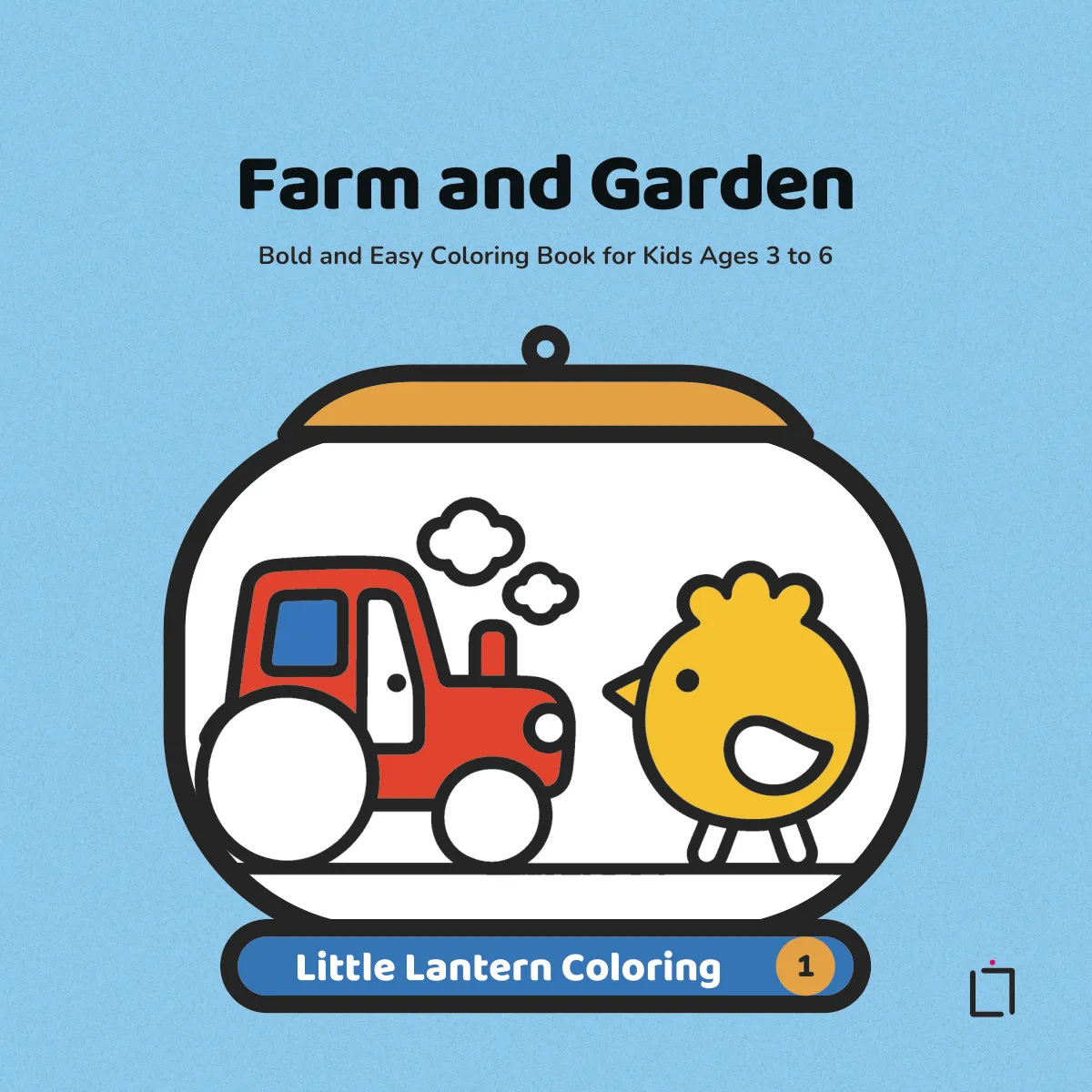
This part is about our own books, so weigh it accordingly. Farm and Garden’s page sends four of the book’s pictures free by email, laid out for A4 and for US Letter. They are drawn to the same measurements as the rest of Little Lantern Coloring: outlines about 1.8 mm thick and every space at least a centimetre across, so they stay bold on a home printer. The book itself, 52 pictures for ages 3 to 6, goes on sale in November.