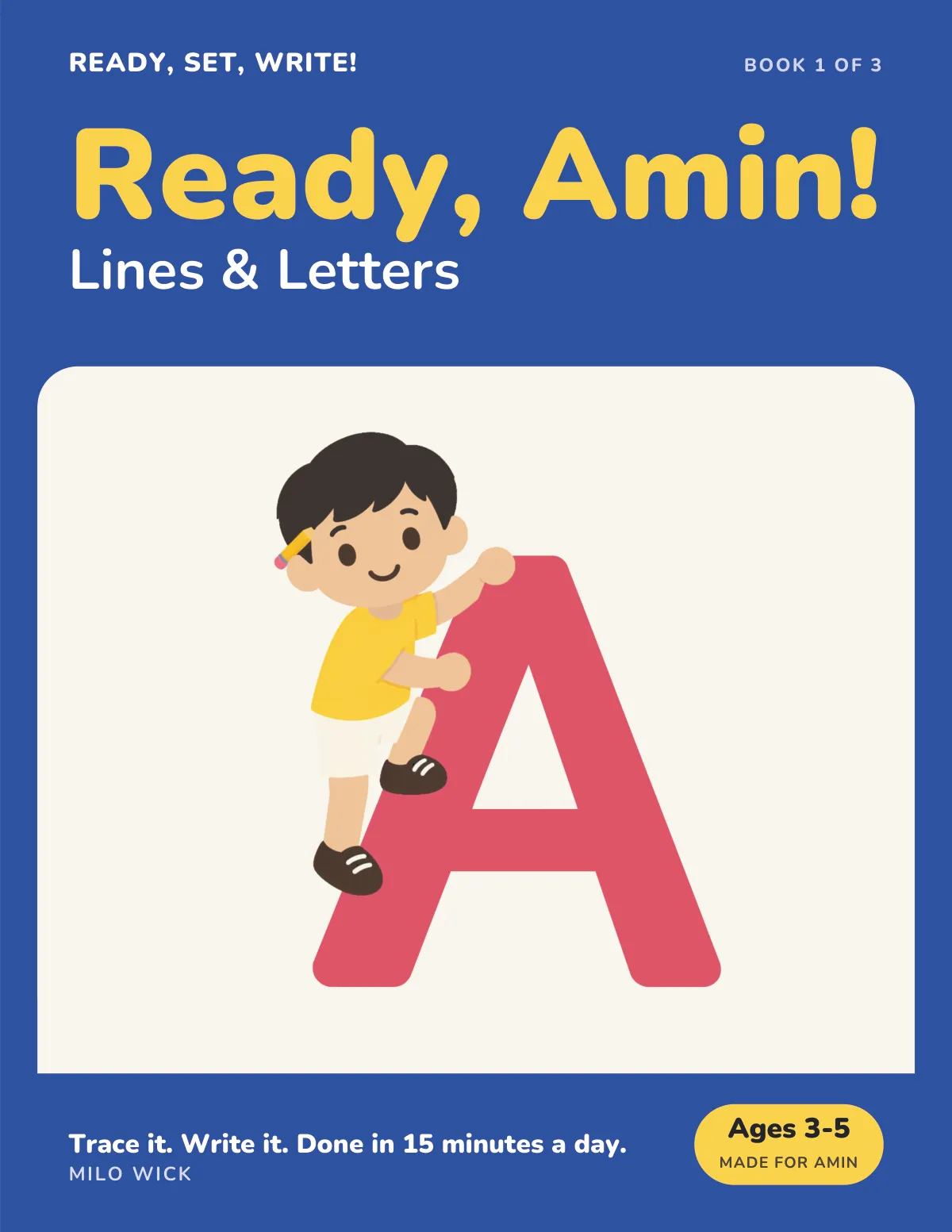
A book you give a child may be kept for thirty years, and the line inside the cover is the part they will reread. What goes into a good one, examples for each age and occasion, and the mistakes that make one awkward to read later.
The four parts
Whatever you write in a book dedication for a child, it needs four things, and almost every good one is these four in this order:
- Their name. “For Maya”, or “Dear Maya”. The child will look for it first, and at 4 it may be the only word on the page they can read.
- One line. About them, about the book, or about the two of you. This is the part to think about; the rest writes itself.
- Who it is from. “Love, Grandma and Grandpa”, in the name the child calls you. A child of 4 does not know that Grandma is called Elizabeth.
- The date. Month and year at least, and the occasion if there is one: “Christmas 2026”, “your fourth birthday”. Nobody remembers when a book arrived, and twenty years on the date is often what makes the page worth keeping.
Two or three sentences is enough. A dedication is read aloud, usually by the person who wrote it, and it should take less time to read than it takes the child to want to turn the page.
Write to the child
The commonest mistake is writing to the parents over the child’s head: “May this book bring Maya as much joy as it brought her father”. It is a kind thought, and the child cannot follow it.
Write in words the child could understand if they were read aloud, and will soon read for themselves. Short words, short sentences, their name at the front, and something they would recognise as true about them: that they love diggers, that they ask “why” all day, that they just learned to ride a bike. A specific line about the child outlasts a general line about reading, because it is the part that still tells them something when they find the book again.
Ideas by age
Under 3: for them to hear. The dedication is read to them, so write something warm to say out loud.
- “For Sam, who points at every dog. There are four in here. Love, Nana, March 2026.”
- “Dear Ivy, for all the bedtimes still to come. Love, Mum and Dad.”
3 to 5: for them to find their name. At this age a child recognises their own name before almost any other word, so put it where they will see it and say it as you point.
- “For Maya, age 4, who already knows the M in her name. Now meet the other 25! Love, Grandpa.”
- “Noah, this book is about a boy who asks a lot of questions. We thought you two would get along.”
- “For Lena, our brave girl, on the day you started school. Love, Oma and Opa, September 2026.”
5 to 7: for them to read themselves. A child who is learning to read will read the dedication before the book. Keep it in words they can decode, and give them something to answer.
- “Dear Leo, read this one to me next time I visit. I will bring the biscuits.”
- “For Amira, who reads under the covers. Your secret is safe with us.”
Ideas by occasion
A birthday. Say the age. “For Finn on your 5th birthday” tells a grown Finn exactly how old he was, which he will be glad to know.
Christmas, Sinterklaas or another holiday. The year matters more than the holiday. “Christmas 2026” places the book in a life; “Merry Christmas” does not.
Starting school. A line about being ready: “For Maya, who is ready for big school. Your name is the first thing you’ll write there.” This is the occasion where a book that teaches something is the right gift, and the dedication can say why.
A new brother or sister. The book is for the older child, so the line is too: “For Sam, the best big brother in the world, from Grandma, on the day Ivy was born.”
From a grandparent or someone far away. Say where you are and that you are thinking of them: “From Auntie Jo in Canberra, who will ask you all about it on the phone.”
For a book that teaches something
A workbook, a first reader or a book of letters asks something of the child, so the dedication can do what a good teacher does: praise the trying, not the result.
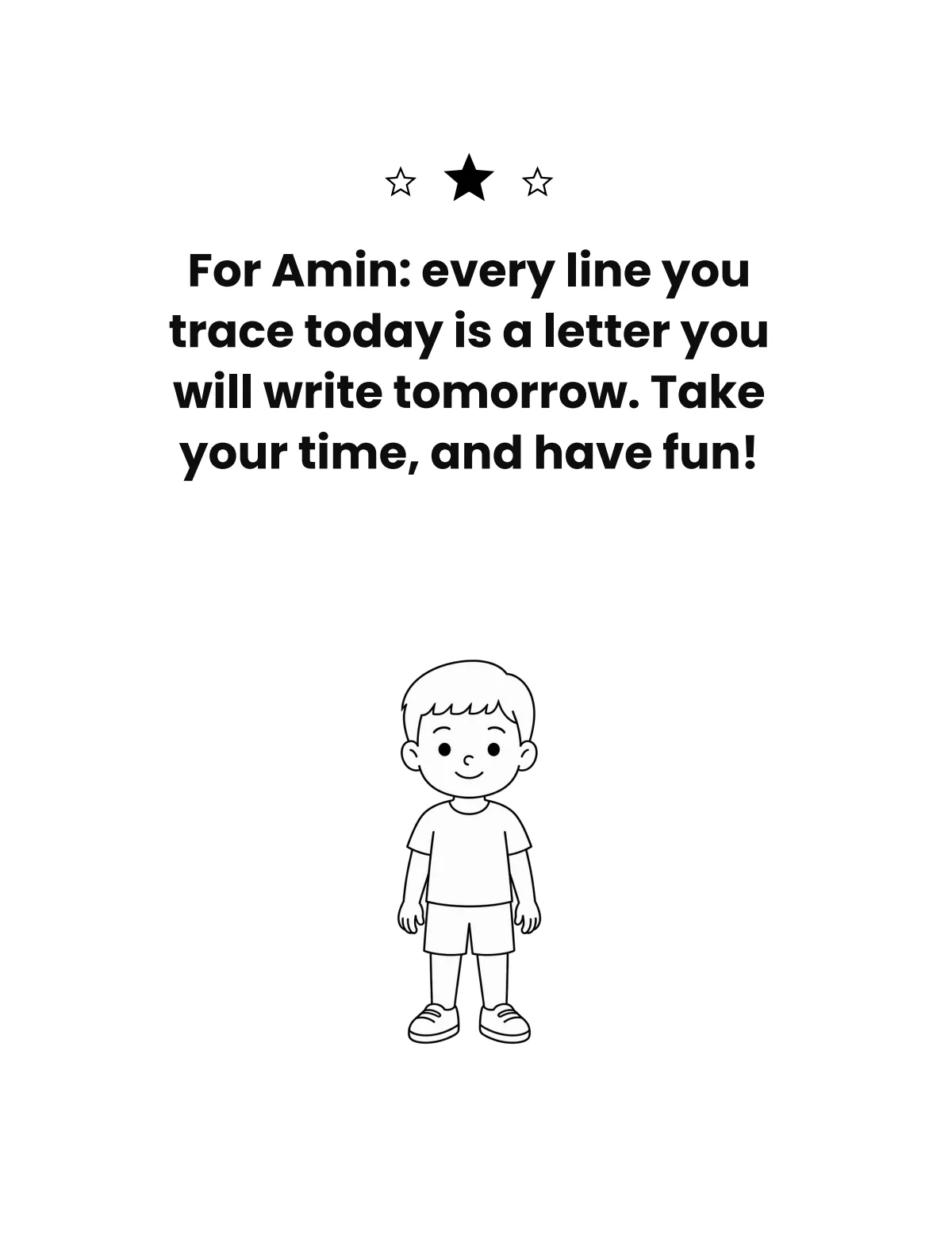
- “For Maya: every line you trace is a letter you’ll write one day. Take your time.”
- “Dear Leo, it’s fine to go wobbly. Everyone’s first letters do.”
- “For Ana, who can already write the A. Twenty-five to go, and we’re cheering for every one.”
Leave out anything that sounds like a target. “Be top of your class!” is meant kindly and lands as pressure on a 4 year old, and it reads oddly to the 20 year old who finds it.
How to write it in
- Where: the inside of the front cover, or the first blank page, the flyleaf, where the child will see it as soon as the book opens.
- What with: a ballpoint or a fine pen that does not bleed through. Felt tips go through most book paper and onto the page behind.
- How long: the size of the space. If you need more, write a card and tuck it in; the card gets lost, but the dedication does not.
- Print or join up: print, if the child is learning to read. Joined-up writing is unreadable to them for years.
In a personalised book
A printed dedication page is the same four parts with less room: in our personalised handwriting book it is up to 150 characters, printed at the front above the child the book draws to look like yours. That is about two short sentences, so the line has to do the work: their name, one thing about them or the book, and who it is from. Leave it blank and the book prints its own line to the child by name.
The child’s name is already on the cover and every page of that book, which is the reason it is there: a book that is about them is one they want to open. Personalised books for children says what the research found about that, and when it is a gimmick. The personalised book page has the looks a child can be drawn as and the dedication question on the order.