Every coloring book for a small child says thick lines and big pictures. Very few say how thick or how big. Five things to look for in the preview, in the order they matter, and the honest trade between a book and a pad.
Look at a page from the middle
Knowing how to choose a coloring book for a 3 year old starts with knowing where to look. The cover is drawn to sell the book, and the first few pages are often the simplest. The middle of the book is where the pictures get busier, smaller and fussier, and it is the middle your child will spend most of their time in.
So open the preview, or the look inside, and go past the first five pages. If the listing shows a sheet of every page at once, look at that. What follows are the five things to check on those pages, in the order they matter.
One big thing a page
A three year old colors a thing: the duck, the tractor, the flower. A page with one big subject on it is a page they can recognise, start and finish. A page with a farmyard on it, a barn, four animals, a fence, a sun and a tree, is a page they scribble across.
Look for one subject drawn large, with little or nothing behind it. A ground line under a cow is fine; a landscape is not. Busy scenes are for a child who is five or six and has started to plan what they draw.
Lines that survive the crayon
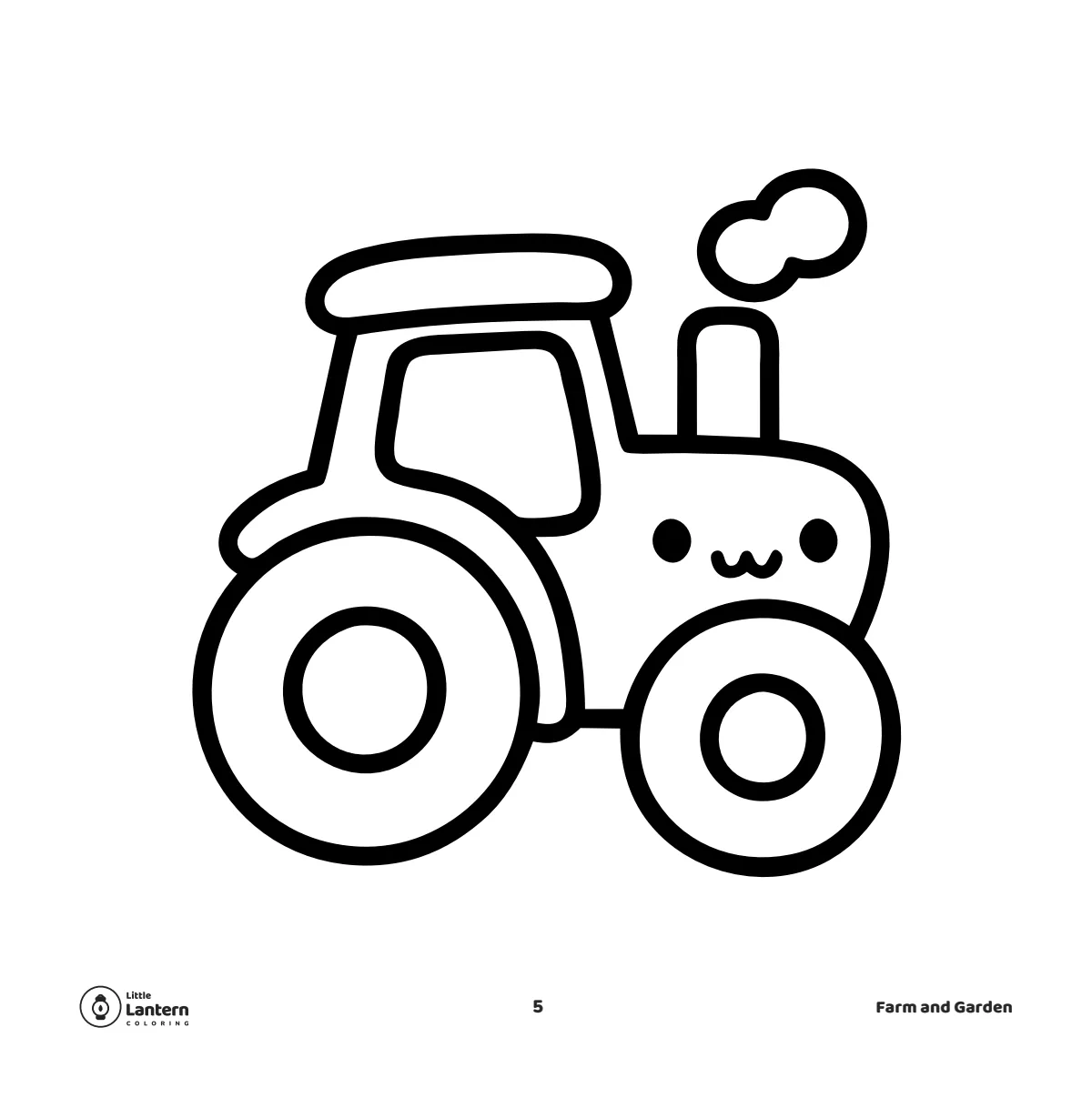
Every book for small children says “thick lines”. The question is whether the line is still there after a crayon held in a fist has gone over it. A three year old presses hard and colors in circles, and a thin outline disappears under the wax by the second minute. Then the cow is not a cow any more, and the page stops being worth finishing.
On a preview, the outline should look heavy, like a marker line rather than a pen line. If a listing gives a figure, about 1.5 to 2 mm is a line a crayon will not bury. Most do not give one, so compare: next to a coloring book for grown-ups, a book for three year olds should look clearly bolder.
No space a crayon cannot get into
The second thing that defeats a small child is a space too small to fill: a hoof, a nostril, the hub of a wheel, the gap between two petals. A chunky crayon is about a centimetre across, and a space narrower than that will be colored over, not colored in. A page full of such spaces is a page the child gives up on.
Count the spaces on a page in the preview. A big simple picture has fewer than a dozen. If you count thirty, it is a book for an older child, whatever the cover says.
Blank backs
If a picture is printed on both sides of the sheet, a marker on one ruins the other, and a crayon pressed hard leaves a ridge you can feel through the page. A book printed on one side only, with the back of every picture left blank, avoids both, and lets a finished page be torn out for the fridge without losing another.
Listings that are single sided say so, because it is a selling point. If a listing does not say it, assume both sides are printed.
The age on the cover
Many books sold for toddlers are for ages 1 to 3. They suit a child who is still scribbling, and a child of three and a half may already find them too young. Books for 4 to 8 start with scenes and small detail. A three year old sits between the two, and is changing quickly.
The way they hold the crayon tells you where they are. Most children start with a fist and move, over the next years, to holding it in three fingers; an NHS occupational therapy leaflet says most master that grip by six or seven (Aneurin Bevan University Health Board). The American Academy of Pediatrics describes a three year old who can already hold a crayon like an adult, thumb on one side and fingers on the other (HealthyChildren). Both are normal at three. Pick a book that works for the fist, because a child with the finer grip will still enjoy big spaces, and a child with a fist cannot use small ones.
When do toddlers start coloring? sets the stages out by age.
A book or a pad
Pads are glued at the top or spiral bound, lie flat and tear out cleanly, and a three year old can color one on their own. A paperback book has to be held open, and a small child with a crayon in one hand cannot always do it with the other. That is a real advantage of the pad.
A book has its own. It holds more pictures for the price, it lasts, and it can be part of a series that grows with the child. If you choose a book, press it open firmly along the spine before the first use, and sit it on a tray or a table rather than a lap.
The five checks, short
- One big subject on each page, in the middle of the book too.
- Outlines that look like a marker line, not a pen line.
- No space narrower than a chunky crayon, and under a dozen on a page.
- Printed on one side only.
- An age band that starts at three.
If you want one of ours
This part is about our own books, so weigh it accordingly. Little Lantern Coloring is built to these numbers and measured on every page before it prints: every outline at least 5 points, about 1.8 mm; no space narrower than 0.4 inches, about a centimetre, the width of a jumbo crayon; never more than eleven spaces on a page; one big subject; and every picture alone on a right-hand page with the back left blank. A page that fails the measurement is redrawn. The books are paperbacks, 8.5 inches square, so they need holding open like any bound book.
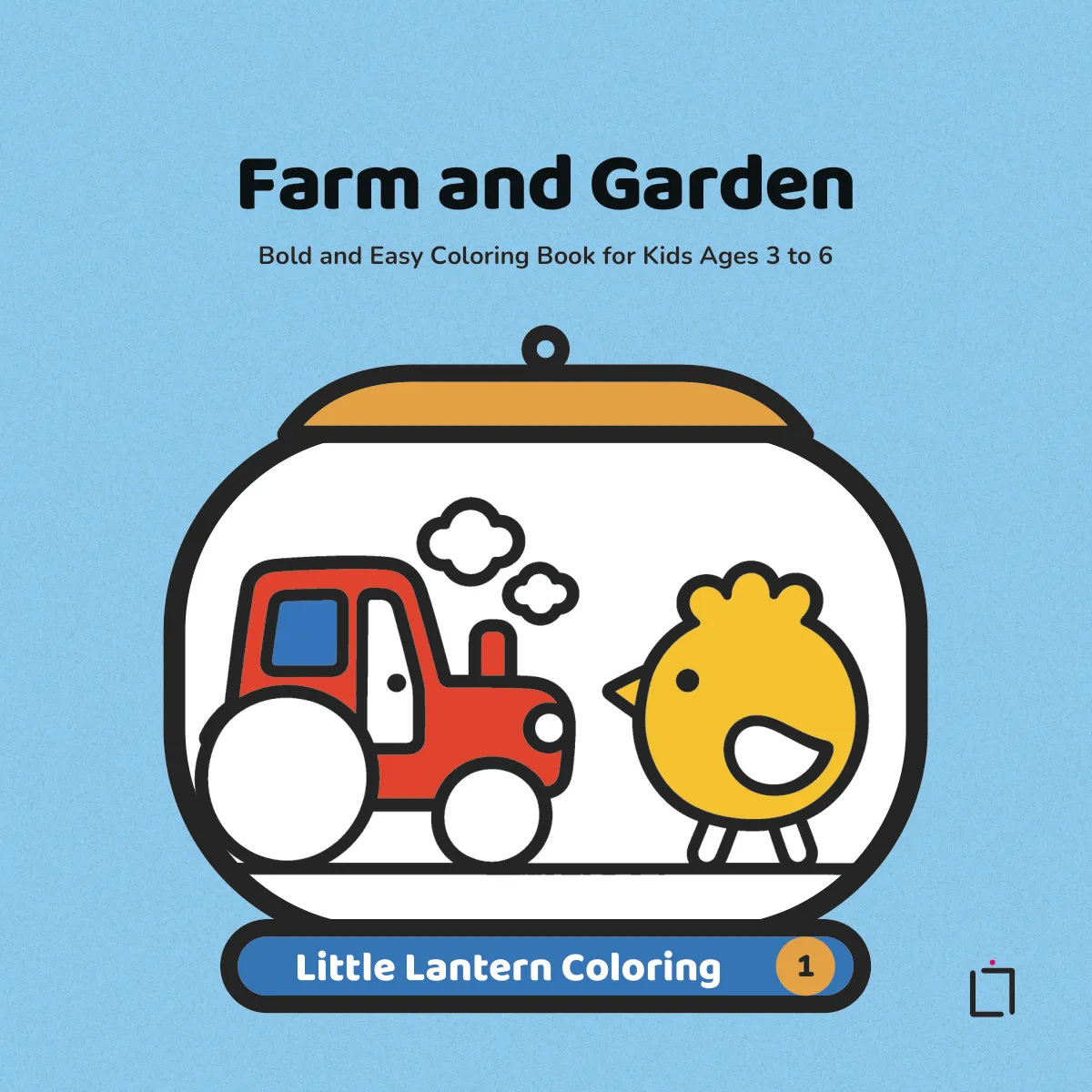
Farm and Garden is the first, with 52 pictures for ages 3 to 6; the tractor above is from it. It goes on sale in November, and its page sends four of the pictures free by email to try first. If you are buying it as a present, coloring gifts for a 3 year old is about what to put beside it.
Sources
- Aneurin Bevan University Health Board, Occupational Therapy Service for Children and Young People. Development of a tripod pencil grip. The stages from a fisted grip to a dynamic tripod; chunkier writing tools may help young children; most children master the tripod grip by the age of 6 or 7.
- American Academy of Pediatrics, HealthyChildren.org. Hand and finger skills of your preschooler, updated 28 July 2022. At three a child can hold a crayon like an adult, thumb on one side and fingers on the other.