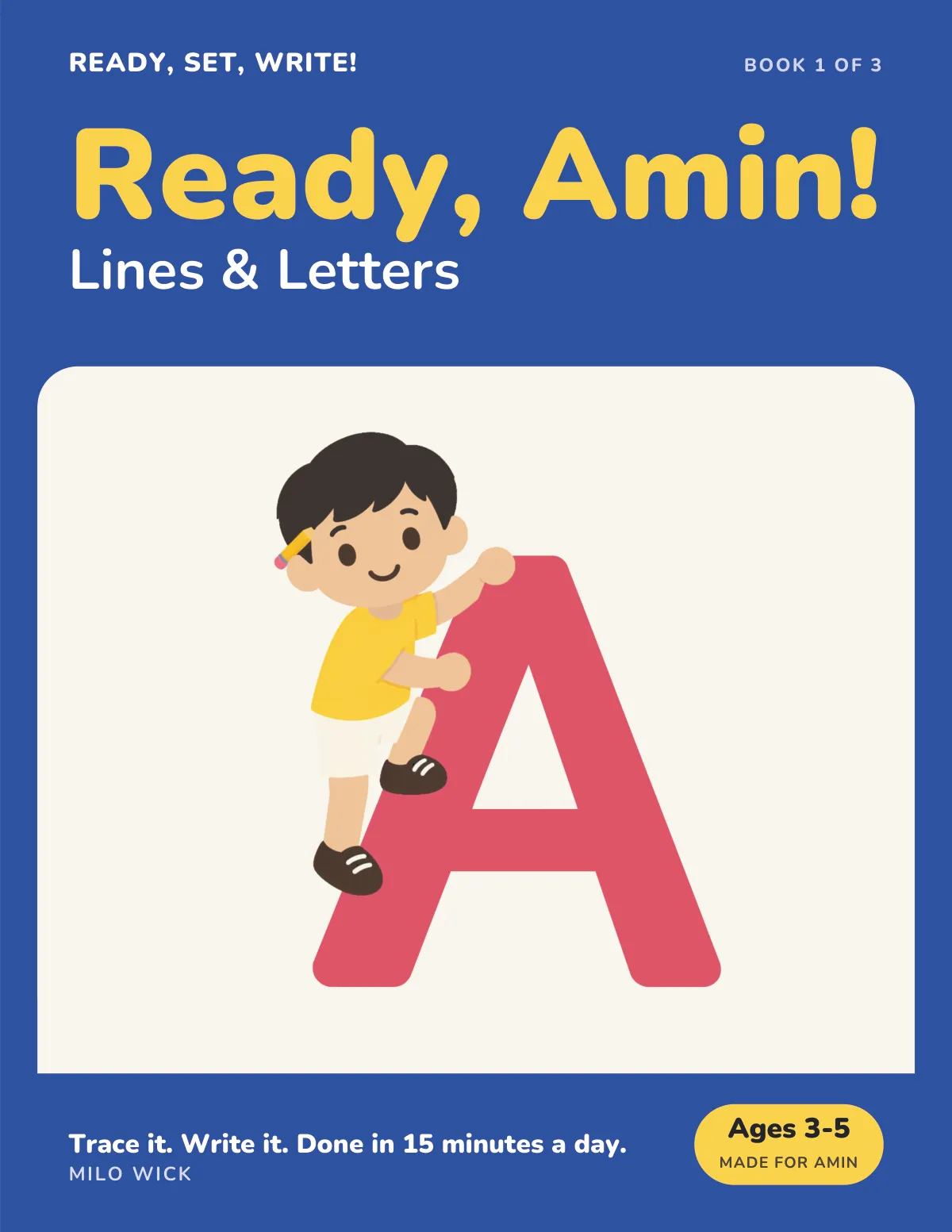
Sinterklaas knows everything about every child: it is all in the Big Book. A book with your child's name and face in it fits that exactly. Why it works, what the Sint writes inside, how it gets into the sack without anyone noticing, and when to order.
Why it suits the Sint
Sinterklaas knows everything. He knows whether you were good, what you want, and that you do not always brush your teeth, because it is written in the Big Book. A child of 4 takes that entirely seriously, which is why a present that shows the Sint knows the child means so much. A personalised book from Sinterklaas, with the child’s own name in it, is that kind of present.
A personalised book does exactly that. The name is on the cover, and the child in the book is chosen to look like yours, with glasses if they wear them. To a child it is not a book with a name stuck on, but a book about them. Out of the Sint’s sack, it is the proof that he really knows.
And it is a present that does not disappear into a drawer after 5 December. A toy from pakjesavond is forgotten by January; a book with your own name in it is opened until it falls apart.
A dedication from the Sint
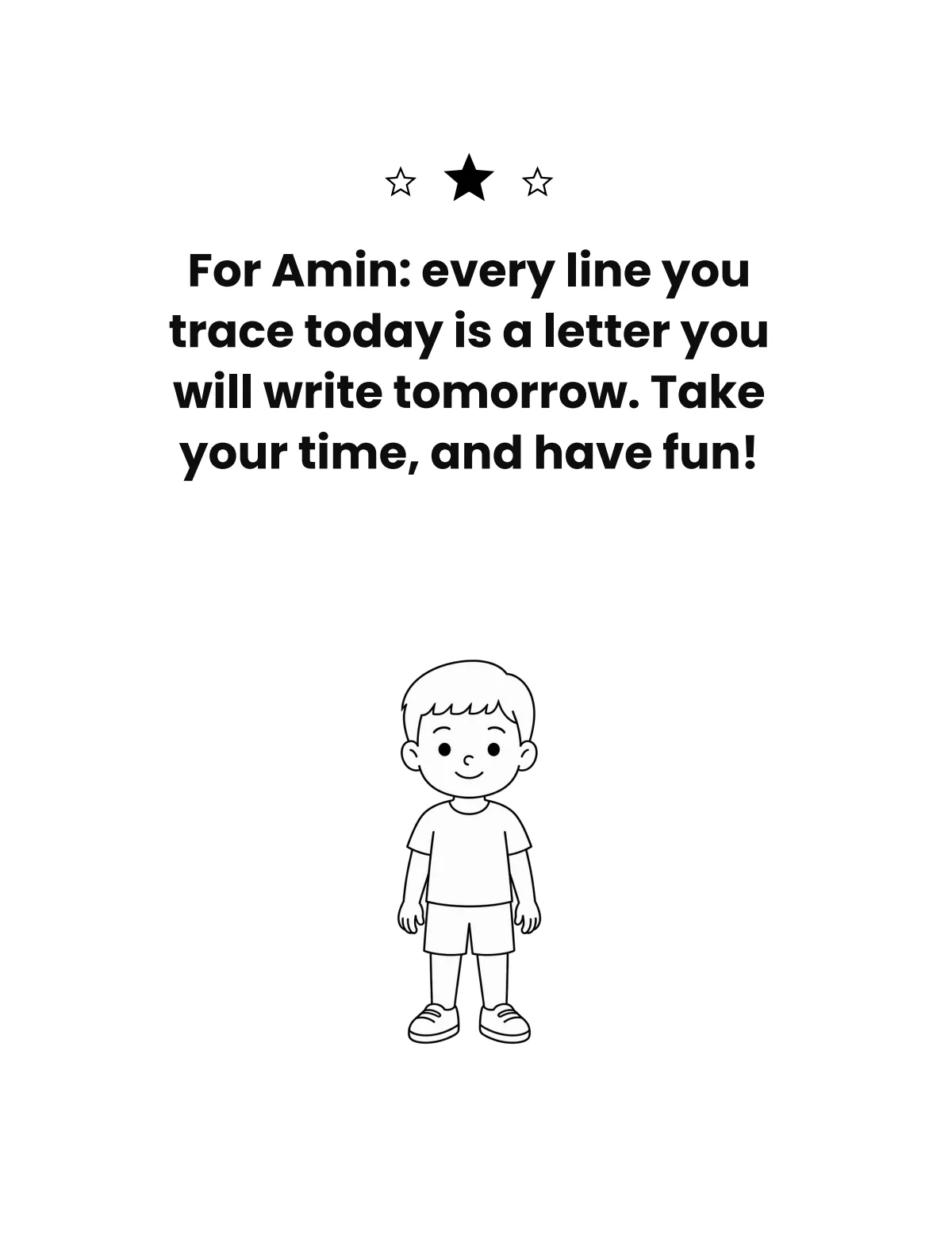
The best thing about a personalised book for Sinterklaas is the dedication page. It is printed, so the dedication can come from the Sint himself, without mum’s or dad’s handwriting. Children know that handwriting better than you think, and a printed dedication keeps the secret.
In our book the dedication is up to 150 characters, one paragraph. That is enough for a short line from the Sint, or a little rhyme:
- “Dear Noor, the Sint read in the Big Book that you want to write your name. Here is a book to practise with. Sinterklaas”
- “For Daan. Piet saw you drawing, and so did the Sint. Now for the letters! Love, Sinterklaas, 2026”
- “Dear Sam, the Sint wrote this for you: every letter you learn is one you keep. Sint and Piet”
Put the year in. In twenty years, “Sinterklaas 2026” inside the cover is the part someone keeps longest. What to write in a book for a child has more ideas, by age.
The poem that goes with it
A present from the Sint comes with a poem. Two ways to use one:
- The poem points to the book. “The Sint looked high, the Sint looked low, for something only Noor would know. He found a book, and who was in? Noor herself, from the very first page in!” The child opens the book and finds themselves.
- The poem is the surprise. Have the child hunt for their own name in the book, and write the poem as a treasure hunt: “On the cover, on each page, and at the end you’ll find it too: look for your name, it’s everywhere, because this book was made for you.”
The poem can go on a separate sheet, taped to the wrapping. The book is for years; the poem is for that one evening.
Ordering in time
A personalised book is not on a shop shelf. It is made for your child, you get a proof to check first, and then it is printed and posted. The proof comes within a day; after that it takes 6 to 15 days to reach your letterbox, depending on the country, and the post can be slower in the weeks before 5 December.
So order early in November. The last order date for Sinterklaas is on the personalised book’s page every year, and it falls well before pakjesavond.
Keeping the secret
- Have it delivered to you. If a grandparent orders, have it sent to them or to the parents, but so that the child does not see the parcel arrive.
- Open the parcel yourself. It comes from the printer, not from the Sint. Wrap the book again, in Sinterklaas paper.
- Keep the proof out of sight. You get a proof of the whole book to check; do not leave it open on a tablet the child plays with.
- Pakjesavond or the morning of 6 December. In the Netherlands it comes in the sack on pakjesavond, the evening of 5 December; in Flanders it is waiting on the morning of 6 December. A book is really too big for the shoe, and too good.
Which child, which book?
A personalised book works best in the years a child believes in the Sint and is just starting on letters. Our handwriting book comes in two parts:
- Book 1, ages 3 to 5. Lines, shapes and the capital letters, with a page where the child learns to write their own name.
- Book 2, ages 4 to 6. The small letters and the numbers to 20, for a child who already knows the capitals.
Both in English or in Dutch. If in doubt, choose Book 1: a child who is further along finishes it sooner, and a child who starts Book 2 too early gets discouraged. Personalised books for children says what the research found about books with the child’s name in them, and when they are no more than a gimmick.