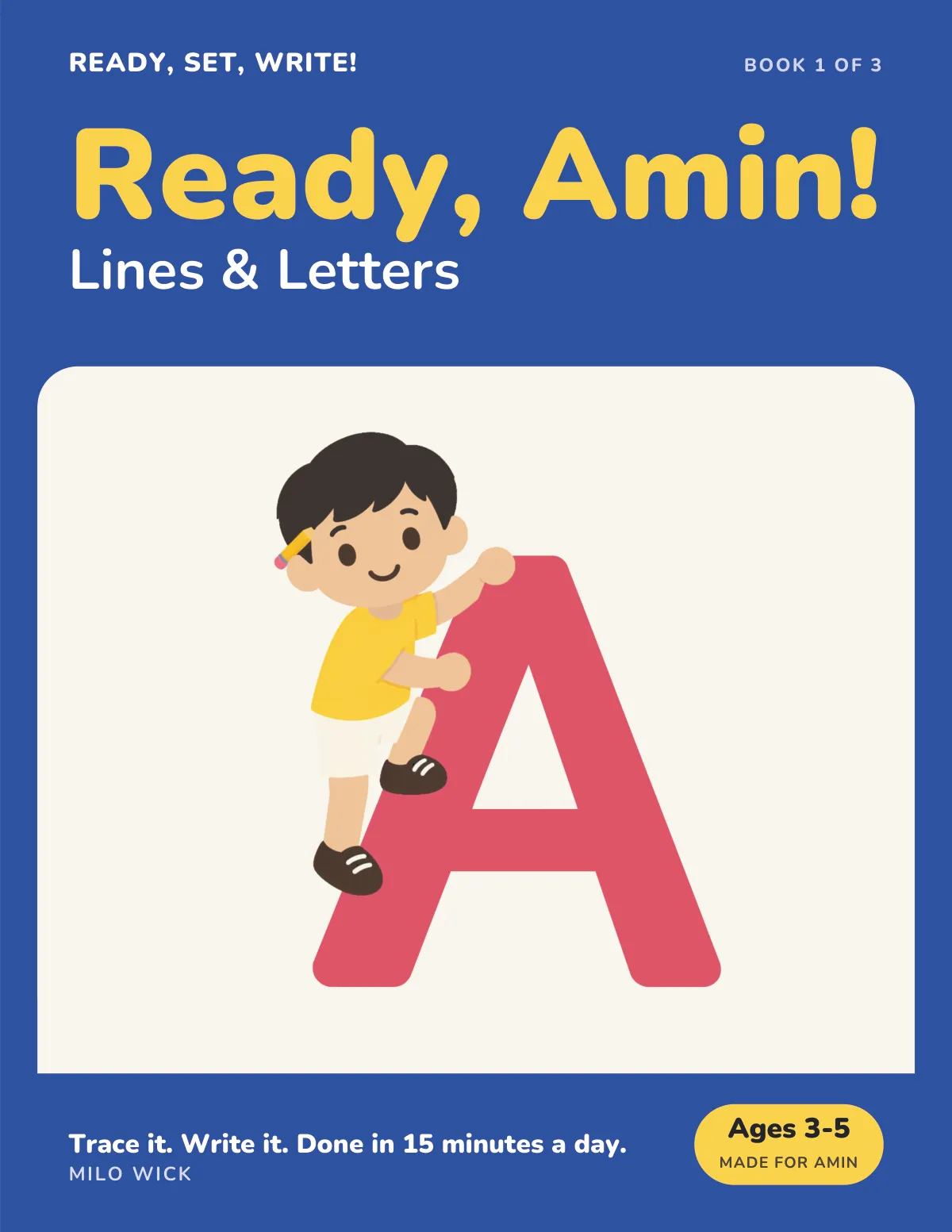
Before a child writes their name, they learn to know it when they see it, and it is the easiest word they will ever learn to read. Why the name is the right place to start, twelve activities that take no special materials, and how to make them harder as the child gets them.
Why the name comes first
Name recognition activities are where reading starts in preschool, because a child’s name is the first word most children learn to read, and that is not an accident. They see it more than any other word: on their peg, their cup, their drawings, their birthday cards. It means something to them that no other word does. And it carries their first letters. Children learn the letters in their own name earlier than other letters, a pattern researchers call the own-name advantage (Justice and colleagues, 2006, with 339 four year olds), and they know the name of their own initial better than any other letter’s, though not yet its sound (Treiman and Broderick, 1998). In a yearlong study of 3 to 5 year olds, about 40 per cent of the letters children wrote unprompted came from their own name (Bloodgood, 1999).
So the name is where reading and the alphabet both start. A child who knows that M-a-y-a says Maya has learned that letters in a row make a word, that the order matters, and that the same letter looks the same wherever it turns up. That is a lot to learn from four letters.
When to expect it
England’s early years guidance, Development Matters, expects children under 3 to start noticing print such as the first letter of their name, and 3 and 4 year olds to be learning to write some or all of it. Recognising comes first, often by the first letter and the length of the word before the child looks at the rest. “That’s mine, it has the M” is name recognition, even if Max’s name would get the same answer. By 5, the CDC’s milestones expect a child to write some of the letters in their name and to name some letters when you point to them.
A child who is not interested at 3 is not behind. Put the name around them and come back to the games in a month.
Twelve activities
None of these needs anything you do not already have. Use the name the way the child will see it at school: a capital at the start and lowercase after it, Maya rather than MAYA, unless the child is not yet 3 and a half and only knows capitals.
- The name everywhere. On the bedroom door, the toothbrush cup, the peg, the drawer with their socks, in large clear letters. Point to it and say it whenever you pass.
- Whose is this? Label two or three family things with names, two cups or two coats, and ask the child to find theirs by the label.
- Name hunt. Write the name on a card and hide it around a room with three blank cards. Then with three cards bearing other names. Then names that start with the same letter.
- Pick it out. Four name cards on the table: theirs and three others. Which one is yours? Swap the positions and ask again.
- Name puzzle. Write the name large on a strip of card and cut the letters apart. The child puts them back in order, with a whole name on another card to check against.
- Magnetic letters. Spell the name on the fridge. Knock it down, mix in two other letters, and let them rebuild it.
- The first letter in the street. Look for their first letter on signs, number plates and shop fronts. It is “your letter” for a while, which is how most children learn their first one.
- Name in the sand. Write it in sand, flour, shaving foam or with a finger on a steamy window, and have them look while you say each letter.
- Morning sign-in. A sheet on the fridge with the family’s names. The child finds theirs each morning and puts a sticker or a tick beside it. Nurseries do this for a reason.
- Name train. One letter on each carriage, drawn or made of boxes. Which carriage comes first? Which one is the M?
- Spell it to a tune. Sing the letter names to a song the child knows: “M, a, y, a, that spells Maya”. The letter names, not the sounds, because these are what they will say as they write it.
- Family names. Put the family’s names side by side and look for the letters they share. “Mum has an M, like Maya.” The name becomes the key to other words.
Making it harder
Once a child finds their name every time, change one thing at a time:
- Names that look alike. Maya beside Mia and Max, so the first letter is no longer enough and they have to look further in.
- Smaller and plainer. The name in normal print size, without colour, among other words.
- Letters out of order. Maya, Myaa, Amya: which one is right? This is the step that shows they know the order, not just the shape.
- Naming the letters. Point at a letter in their name and ask what it is called. Then ask them to find the same letter in a book.
Snags
- Only the first letter counts. Normal at 3, and the start of it. The look-alike names above move them on.
- A sibling’s name gets claimed. If two names share a first letter, this is expected. Put the two names side by side and look at what is different.
- Bored after a day. Twelve activities is a month of two minutes a day, not a week. Short and often beats long and once.
From knowing it to writing it
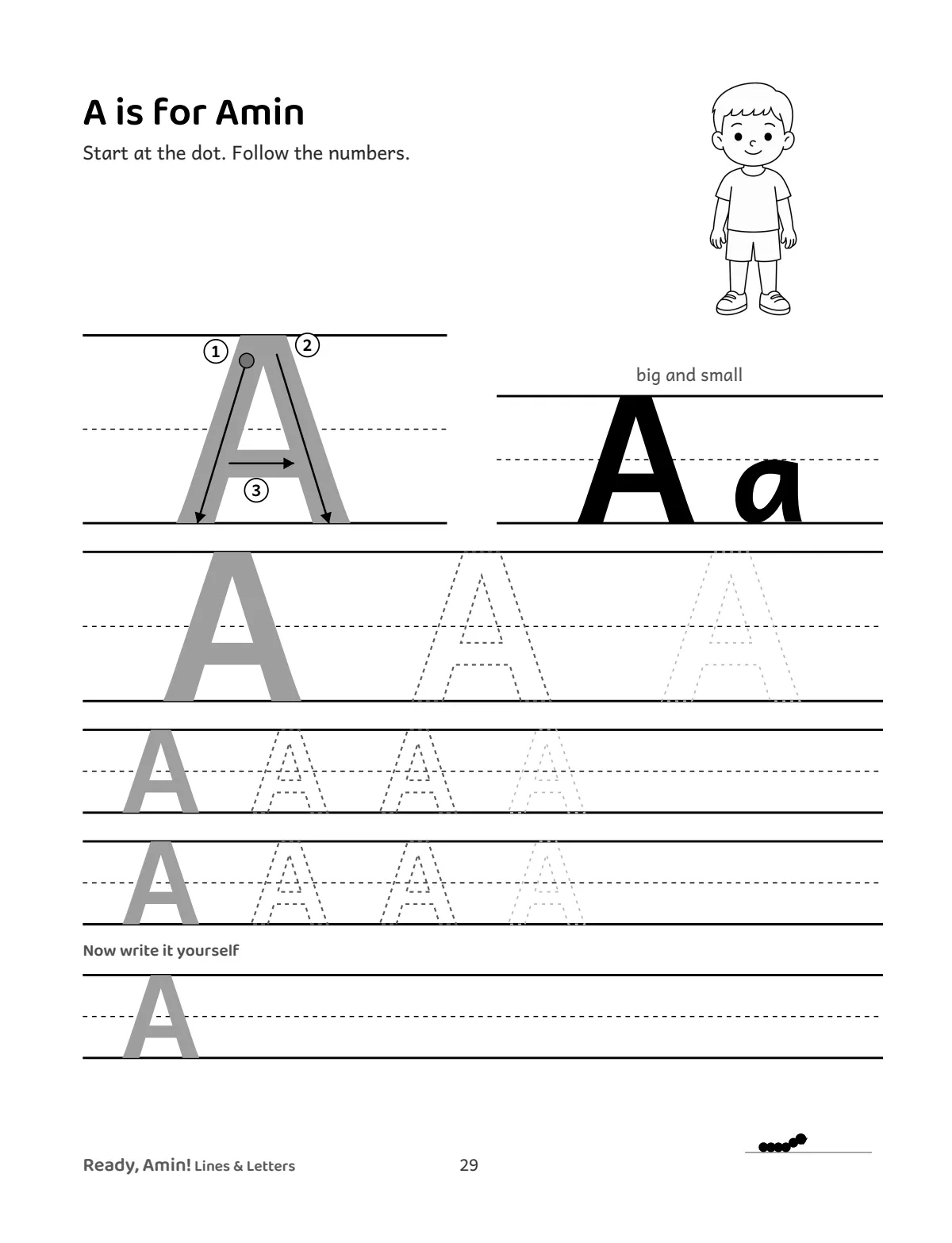
A child who can find their name and put its letters in order is ready to trace it, then copy it, then write it alone. How to teach a child to write their name has those four steps, when to start, and whether it should be MAYA or Maya. When do children learn to write letters? says what to expect at each age.
A book with the child’s name in it is the name everywhere in one object. Personalised books for children says what the research found about reading them, and the personalised book puts the child’s name on the cover, in the corner of every page, and on the page for their initial.
Sources
- Bloodgood, J. W. (1999). What’s in a name? Children’s name writing and literacy acquisition. Reading Research Quarterly, 34(3), 342 to 367. 67 children aged 3 to 5; the links it reports between name writing and alphabet knowledge are correlations.
- Centers for Disease Control and Prevention. Important milestones: your child by five years. Learn the Signs. Act Early.
- Department for Education (2021, updated 2023). Development Matters. Non-statutory guidance for the early years foundation stage in England, Literacy.
- Justice, L. M., Pence, K., Bowles, R. B., and Wiggins, A. (2006). An investigation of four hypotheses concerning the order by which 4-year-old children learn the alphabet letters. Early Childhood Research Quarterly, 21(3), 374 to 389.
- Treiman, R., and Broderick, V. (1998). What’s in a name: children’s knowledge about the letters in their own names. Journal of Experimental Child Psychology, 70(2), 97 to 116.